* DISABILITY TAX 
preparation
 SPECIALIST 
* TRAINING
* TAXPAYER
 ASSISTANCE 
 

i understand your battle with sars

I know firsthand that caring for a loved one with a disability comes with challenges that go far beyond financial strain. The emotional, physical, and logistical demands can feel overwhelming, and the last thing you need is additional stress from the tax system.
That’s why I started Phoenix Disability Tax—to help people like you claim the tax benefits you’re legally entitled to without confusion, frustration, or hidden fees. I specialize in disability tax rebates from SARS, ensuring you don’t miss a single deduction that could put money back in your pocket.
In today’s tough economy, these tax refunds can be life-changing. They can help cover therapy, assistive devices, medication, transport, and even everyday necessities like food and utilities. My goal is to make the process simple, stress-free, and efficient—so you can focus on what truly matters: caring for your family.
(A note from Michelle Evler-Scott, Founder)

WHY I DECIDED TO Add disability tax preparatioN teaching to my services.. 

Let’s be honest—navigating the disability tax credit system isn’t exactly a walk in the park. It’s full of technical jargon, complicated forms, and roadblocks that can make it feel like an uphill battle.
I get it. I’ve been there.
But here’s what I’ve learned: you are stronger and more capable than you think. And here’s something even more important—you don’t need extra stress when you’re already juggling so much. That’s why I do what I do—to take the mystery and frustration out of this process and give you the tools you need to succeed.
Most accountants and tax practitioners won’t tell you the full story. Why? Because keeping it complicated means you’ll keep paying them for long hours and expensive services.
But that’s not how I work.
I believe in empowering you. By taking small, strategic steps throughout the tax year, you can save thousands in professional fees and keep more of your hard-earned refund where it belongs—in your pocket.
I do this because I know your struggles personally. I know the stress, the frustration, and the exhaustion. I’ve walked in your shoes. And this is my way of paying it forward.

You’re not alone in this journey
Let me help you secure the support you deserve. 💙

fairness,
transparency,
more money in 
your pocket

some conditions that may qualify

Autism spectrum Disorders & ADHD
Chronic Neurological Conditions
Multiple Sclerosis
Parkinson's Disease
Sickle Cell Disease
Neurodevelopmental Disorders
Tourette’s syndrome
Bipolar Mood disorder
Depression
Treated addiction.
Eating disorders
Auto immune diseases
Myasthenia gravis
Rheumatoid arthritis
Down Syndrome
Foetal Alcohol Spectrum Disorder
Fragile X Syndrome
Kernicterus
Language and Speech Disorders
Phenylketonuria (PKU)
Williams Syndrome
Alzheimer's Disease
Body Dysmorphic Disorder
Spina bifida
Injuries to Individual Nerve Cells
Neuropathy
Motor neuron disease
Parkinson's disease
Dyslexia
Osteoarthritis
Xeroderma pigmentosum (XP)
Albinism
Stroke victims

.

sars defines a disability

For tax purposes, SARS defines a disability as a moderate to severe limitation in a person’s ability to function or perform daily activities. This limitation must be:
✔ Ongoing – It must have lasted or be expected to last for more than a year.
✔ Diagnosed – A registered medical practitioner must confirm the disability and assess its severity.
✔ Substantial – The limitation must significantly impact daily functioning, not just cause minor inconvenience.
Types of Impairments considered disabilities
A disability can arise from one or more of the following impairments:
🩻 Physical Impairment – Conditions affecting mobility, strength, or coordination.
👀 Sensory Impairment – Vision or hearing loss, even with corrective measures.
🗣 Communication Impairment – Difficulty speaking or understanding language.
🧠 Intellectual Impairment – Cognitive disabilities affecting reasoning or learning.
🧩 Mental Impairment – Psychiatric conditions that severely impact daily life.
Key Takeaway:
A disability for tax purposes may not match the medical or social definition of disability used by organizations like the World Health Organization (WHO). SARS applies a specific tax-based definition to determine eligibility for disability tax benefits.
For full details, refer to SARS's "Guide on the Determination of Medical Tax Credits".
Contact Links

section 6b of the income tax act
(Additional medical tax credits)

MAKE SURE YOU QUALIFY

You Must Pay Tax – You need to be a taxpayer, whether as a sole proprietor, commission earner, or salary earner (PAYE).
You Must Have a Disability or Support a Disabled Dependent – This includes having a disability yourself or having a disabled child or spouse who relies on you for financial support.
 You Must Have Medical Expenses – Your claim is based on actual medical expenses incurred.
  • Those who contribute to a medical aid often qualify for higher refund amounts due to structured medical expense deductions

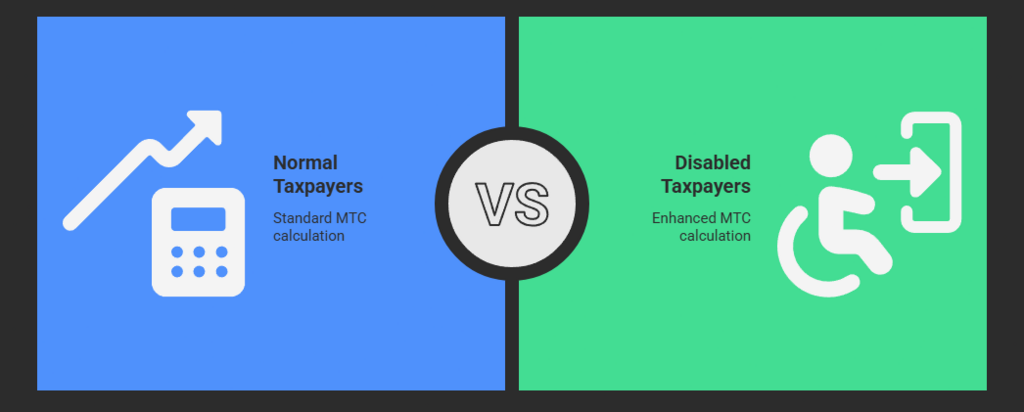
What a Disabled Taxpayer can claim

Who may claim?

🔹 The Taxpayer: If your doctor has confirmed your disability, you may be eligible for disability tax credits.
🔹 A Stepchild: You can claim if they are financially dependent on you.
🔹 Your Spouse or Life Partner: This includes domestic partners in long-term relationships, even if not legally married

Who may not claim disability tax credits?
A taxpayer cannot claim disability tax credits for parents or other dependents. However, they may complete the SARS form (ITR-DD form) to confirm the disability, and those expenses can still be claimed as impairment expenses.
 

When Are Impairment Expenses Included in the Disability Tax Credit Calculation?
These expenses will not be included in the disability tax credit calculation unless:
✔ You already have a disabled dependent, or
✔ You are a disabled taxpayer yourself.
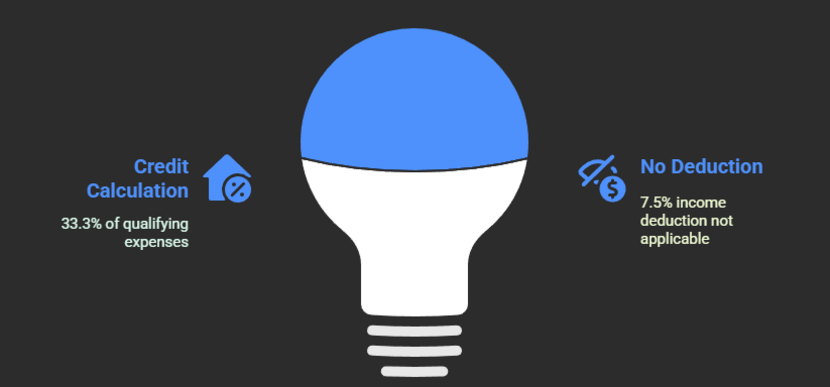
Since all medical, impairment, and disability-related expenses are grouped together, they will only be factored into the disability tax calculation if one of these conditions applies.
What Medical Expenses Can Be Claimed?
✅ A taxpayer can claim all medical, impairment, and disability-related expenses they have paid for all their dependents, including parents and other family members.


common issues with claims


Your claimable amount exceeds your tax paid
You cannot claim more than the tax you have paid within the tax year.
If your medical and disability expenses exceed your PAYE or Income Tax paid, your refund will be limited to the tax you contributed.
⚠️ Attempting to claim non-qualifying expenses.(Over the counter or vitamins)
🚫 GAP Cover or Health Insurance – These fall unde.r insurance laws, not medical expenses as defined by SARS.
🚫 "Claims Not Paid by the Fund" – On your medical aid tax certificate, you’ll find an amount labeled "Claims not paid by the fund." These represent shortfalls and unpaid amounts that your medical aid did not cover. If the Taxpayer cannot provide proof that these items had indeed been paid by the Taxpayer, it will not qualify. 
📑 What You Need for Tax Season:
✔ Request a detailed report from your medical aid showing unpaid claims.
✔ Provide invoices and proof of payment for these expenses.
📌 The Heart of Disability Tax Claims:
If you didn’t pay for the medical expense yourself, you cannot claim it. Keeping proper records and proof of payment is essential for a successful refund.
💡 Want to learn how to track your medical expenses properly?
Join our membership program for exclusive templates and guidance!


Claimable
Disability-Related
Medical Expenses

✔ Medical aid contributions for yourself and your dependents.
✔ Out-of-pocket medical expenses not covered by medical aid for the taxpayer and all their dependents (not just the disabled person).
✔ Caregivers' salaries, if employed solely for disability support.
✔ Live-in caregiver expenses (electricity, water, and food – capped at 20% of the National Minimum Wage)
.✔ Special education schools and tutors
.✔ Assistive devices, such as wheelchairs, hearing aids, prosthetics, and more
.✔ Speech therapy, occupational therapy, and psychiatric treatment
.✔ Alterations to clothing for sensory comfort.
✔ Service animals, including guide dogs and autism support dogs (related expenses are tax-deductible)
.✔ Alternative therapies, such as swimming, horseback riding, and robotics therapy for autism.
📌 For a full list of claimable expenses:See the "Amended List of Expenses You Can Claim (2021 Onwards)" and the "Guide on the Determination of Medical Tax Credits" on the SARS website.

Contact Links

Documents SARS requires

ITR-DD form to confirm the diagnoses and date of 1st diagnoses

Receipts for Medical Expenses
Proof of Payments 
Medical Aid Statements
Expense Breakdown
Other Tax certificates
Additional Supporting Documents
IRP5 & Income Breakdown


why choose us to help you?


✅ A Learning-Based Approach – We don’t just do it for you; we teach you how to navigate the system confidently!
✅ Support Every Step of the Way – You’ll never struggle alone. We provide guidance, advice, and hands-on support throughout the entire process.
✅ Proven Trust & Reliability – Don’t just take our word for it—ask our loyal customers or check out our glowing reviews!
✅ We Fight for Every Cent – We don’t stop until SARS refunds every legally owed cent. If a dispute is needed, we’ll keep pushing until you get what you deserve. We don’t give up.
 
Contact Links

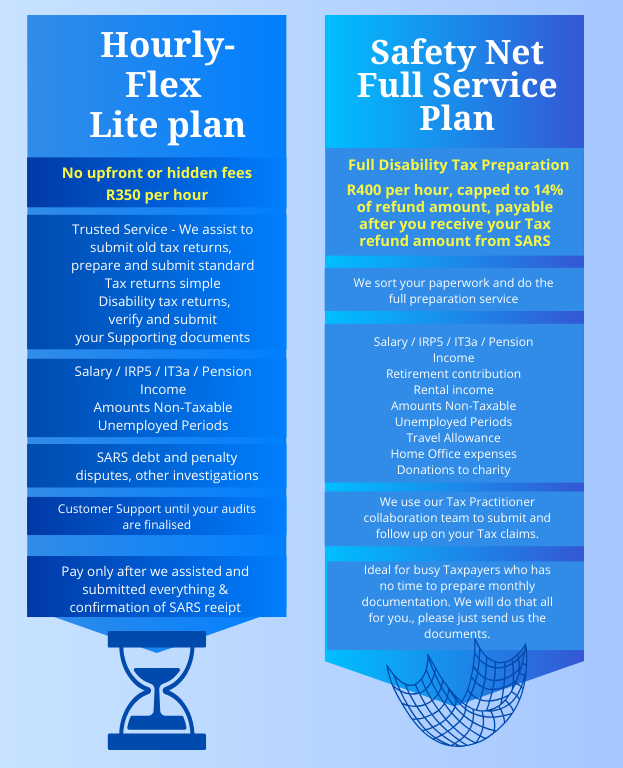
our fee  
membership option coming soon!

Our Google Reviews

See What Our Clients Are Saying

★★★★★

We appreciate your feedback! Click the button below to read our reviews or leave your own review on Google Maps.

View Our Reviews